Written by Grace Sargent
I was recently completing a scholarship application that asked me to describe a change I would like to see in society, followed by another question, “How might we better attract young talent to government careers?”
I immediately thought of a statistic I’d heard not long ago—that over 70% of Americans fail basic civics questions, with only half knowing which branch makes laws in the first place. That reality became even more striking when I spoke at a Christian event in the Capitol two springs ago on the importance of voting. I asked the audience to raise their hand if they could name a single piece of legislation that passed through the Capitol just a few weeks prior. Not a single hand went up.
The fact that not only Americans as a whole, but our fellow Bible-believing South Dakotans lack civic education struck me as a portion of the answer in itself.
As I considered how to respond to the prompt, I reflected on my own journey into civic engagement. I had to remind myself that not everyone grows up with organizations that bring them into the Capitol and show them how accessible government truly is. That realization forced me to ask: How might that narrative change for others?
For me as a teenager, the credit goes entirely—without hesitation—to two organizations: TeenPact Leadership Schools and Family Voice (formerly Family Heritage Alliance). I went from knowing nothing about the Capitol building that I drove by every day, to seeking out every opportunity to be involved.I learned how a bill becomes a law, what the roles of the branches of government are, and how to lead with biblical truth.
But I’m not writing this to list my political resume. I’m writing this so people like you might finally set aside the doubts that “Nobody will listen to me”, or “I don’t even know where to start,” and enter the arena.
Truth be told: South Dakota has one of the most accessible governments in the country. During the legislative session, you can quite literally walk through security, shake your legislator’s hand, and explain how you’re related to their second-cousin’s neighbor. Legislation can easily be found and tracked on sdlegislature.gov. If you care about an issue or want to share your story, you can testify before senators and representatives in committee. If you can’t be there in person, you can testify virtually—I once testified from my dorm room wearing a blazer, blouse, and sweatpants.
As I reflected on my own civic involvement, my answers to both scholarship questions converged on the same idea: meaningful change begins when young people get involved—and stay involved—in government. It ultimately comes down to awareness and experience.
A great frustration of mine has been seeing young people admire figures like Charlie Kirk, Riley Gaines, Megyn Kelly, Brett Cooper, and Bryce Crawford, yet never engaging others—especially those who might disagree—with the truth these influencers promote. Complacency and negligence have taken us far enough down this road. Now, the responsibility rests with us to bring about change.
While we live in a world with information at our fingertips, it’s what we do with that information that counts. Experience matters. To attract young talent to government careers, there must first be awareness of opportunity—beginning before a college internship. It starts in high school. Young people won’t pursue careers they have never been meaningfully exposed to.
Many students choose degree paths in medicine, business, or the social sciences not solely because of interest, but because those careers are familiar, frequently discussed, and associated with stability, pay, and accessibility. Government careers often offer similar benefits, yet they are far less visible and are frequently perceived as inaccessible or overly political.
This lack of exposure contributes to a stigma surrounding public service. For many young people, government is associated primarily with controversy and division, making a career in public service unappealing. However, this perception changes when students see how accessible and impactful public service can be.
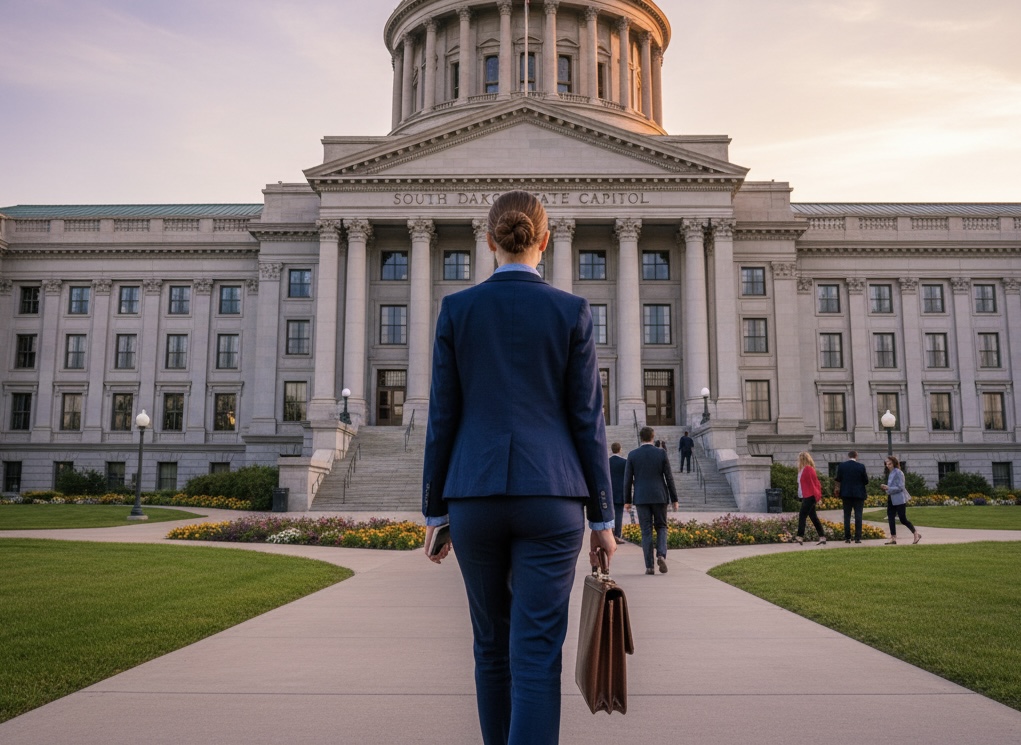
My own experience illustrates this. At 16, I planned to become a cattle rancher and crop farmer. That changed after spending a week at my state Capitol participating in mock legislatures, drafting bills, and meeting elected officials. I went to a public school, and was shocked to not learn anything that stuck with me about how our government functioned. My high school sat just a half mile from the Capitol, and our government class never made a trip to the building that literally houses what we were supposed to be learning about.
That disconnect led me to take a year off to be homeschooled. The following year, I testified in committee meetings, shadowed lobbyist Norman Woods, served as a legislative page, built relationships with lawmakers, and began public speaking. Without those hands-on experiences, I would never have considered a career in government.
To change the narrative, it comes down to early exposure through internships, job shadowing, guest speakers, and partnerships with schools. Civic education should go beyond theory and demonstrate how the government functions as a workplace.
But it also comes down to you and me—encouraging one another to take a stand for what we believe. From the recent fraud uncovering in Minnesota, to the massive mosque being erected in Texas, we cannot afford to sit quietly. Our government is accessible. Former Representative John Mills shares that in the video below.
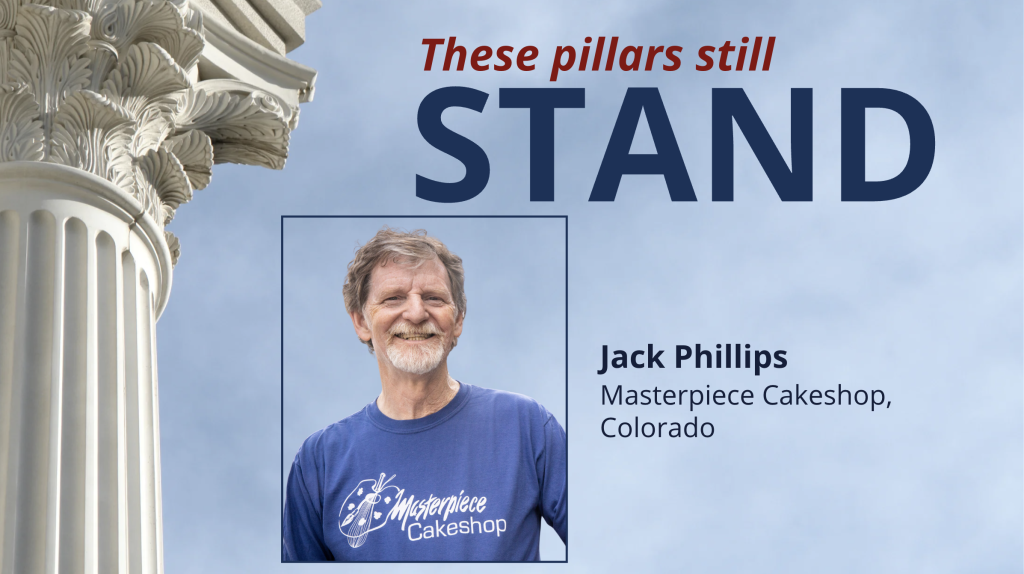
At Stand, I shared quotes from Ronald Reagan and Theodore Roosevelt that I’d like to revisit.
“Freedom is never more than one generation away from extinction. We didn’t pass it to our children in the bloodstream. It must be fought for, protected, and handed on for them to do the same.”
“It is not the critic who counts… The credit belongs to the man who is actually in the arena… who errs, who comes short again and again… but who does actually strive to do the deeds.”
My friends, as Christians in today’s world, we are called to enter the arena—not to be spectators, but servants, warriors of truth and grace. Whether it’s in politics, our schools, our pulpits, our workplaces, or our homes—there will always be critics. There will always be pressure to compromise, to blend in, to stay silent.
But if we believe God’s Word is true—if we know that life, liberty, and moral truth are worth defending—we cannot afford to sit quietly.
Because silence is a choice.
Choosing to remain in the stands is choosing to let the culture speak louder than the Church. But when we step into the arena—when we stand up for biblical truth, for the sanctity of life, for religious freedom—yes, we may face backlash. We may be mocked. We may even lose.
But we will never be counted among the timid souls who know neither victory nor defeat.
So the question remains:
Will we bow to culture or bow to Christ?
Will we echo the world, or will we stand on the Word?
Will we hide in the crowd, or will we be the salt and light this generation so desperately needs?
I say: Let us choose courage. Let us enter the arena—for such a time as this.